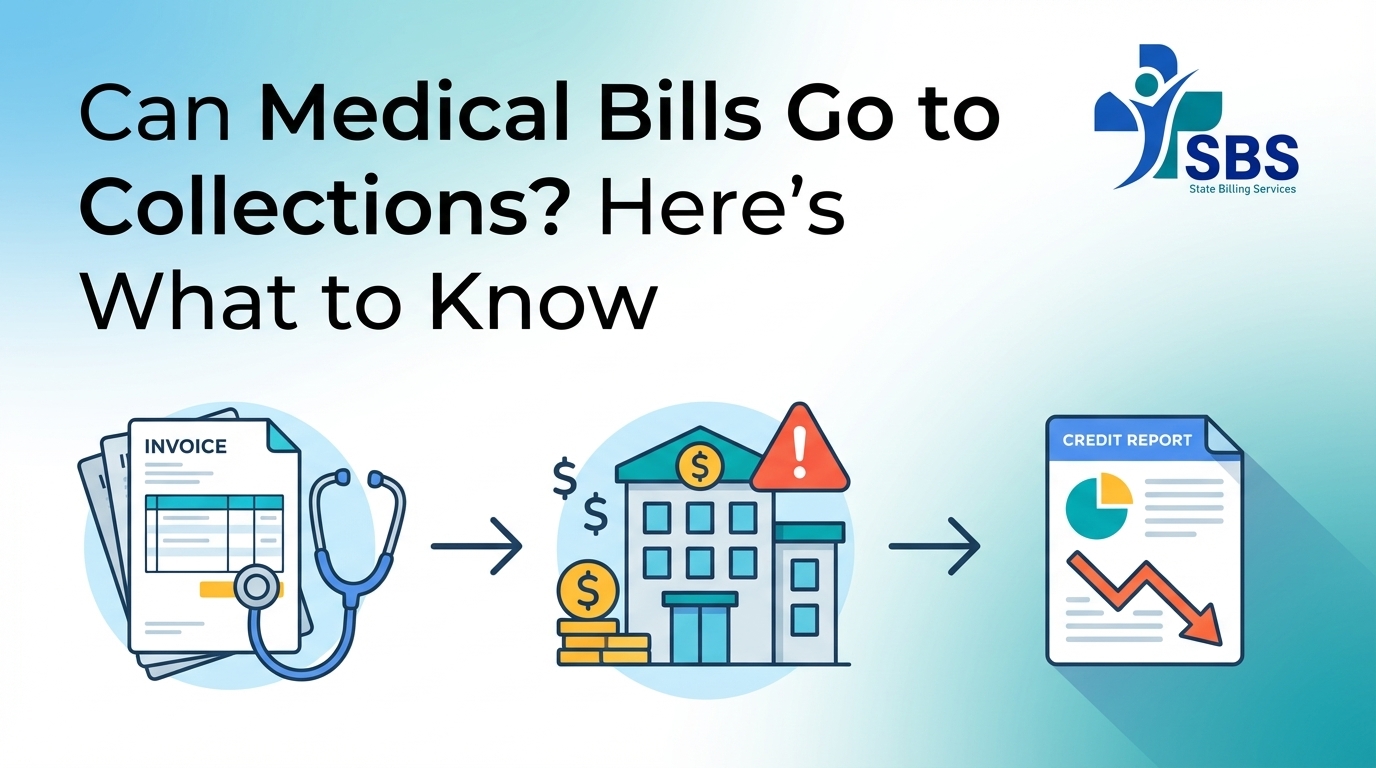
You just got a hospital bill. It’s big. Maybe you don’t have the money right now. You push it aside. Then another bill comes. And another. Then one day, a collection agency calls you.
This happens to millions of people every year. So yes, medical bills can go to collections. But there’s a lot you need to know before that happens, and what to do if it already has.
Let’s break it all down in simple terms.
What Does “Going to Collections” Mean?
When you don’t pay a medical bill, the hospital or clinic may give up trying to collect it themselves. They then sell the debt to a collection agency. That agency now owns your debt. They will contact you to get payment.
This process is called “going to collections.”
According to the Consumer Financial Protection Bureau (CFPB), medical debt is one of the most common reasons Americans face debt collection. In fact, nearly 1 in 5 Americans has medical debt in collections.
Can Medical Bills Go to Collections?
Yes. Medical bills can absolutely go to collections. Most providers give you time first. Usually 90 to 180 days. After that, they may send your bill to a collection agency.
Here is the typical process:
- You receive a medical bill
- You miss one or more payments
- The provider sends reminders
- After several months, the debt goes to a collector
- The collection agency contacts you for payment
Some providers work with Medical Billing Services to manage this process. These services handle sending bills, tracking payments, and reporting unpaid debts. Many hospitals use outside billing companies to handle all of this for them.
Do Medical Bills Affect Your Credit?
Yes. Medical bills can affect your credit. But the rules changed recently.
As of 2023, the three major credit bureaus (Equifax, Experian, and TransUnion) made big changes:
- Medical debt under $500 was removed from credit reports
- Paid medical collections are no longer reported
- Unpaid medical collections now take 1 year (instead of 6 months) to appear on credit reports
So do medical bills affect your credit? Only if they are large and unpaid for a long time. But they still can hurt your credit score if they reach the reporting stage.
A medical collection account can lower your credit score by 50 to 100 points or more. This can make it harder to get loans, rent apartments, or even get a job.
If You Don’t Pay Medical Bills, What Happens?
Many people wonder: if you don’t pay medical bills, what happens? Here is the honest answer.
Short term:
- You get more bills and reminders
- The provider may stop your access to non-emergency services
- Your account may be sent to an internal collections department
Long term:
- Your bill goes to a collection agency
- The collector may call, email, or send letters
- The debt may appear on your credit report
- In some cases, you could be sued for the debt
However, most hospitals will not sue you right away. They often prefer to set up a payment plan. Always ask about financial assistance or charity care before the bill goes to collections.
It is also important to note that medical debt laws differ by state. Some states have stronger protections for patients. Always check your state’s rules.
What Are Medical Billing Services?
Medical Billing Services are companies that manage the billing process for hospitals, clinics, and doctors. They handle:
- Sending out invoices to patients
- Filing insurance claims
- Following up on unpaid bills
- Sending accounts to collections when needed
These services help healthcare providers get paid. But they also handle patient accounts. If you receive a bill from a company you don’t recognize, it may be a Medical Billing Service working on behalf of your doctor or hospital.
What Are Medical Billing Jobs?
Medical Billing jobs are positions that deal with processing and managing healthcare payments. People in these roles work for hospitals, billing companies, or insurance firms.
Common tasks include:
- Processing patient invoices
- Reviewing insurance claims
- Following up on unpaid accounts
- Communicating with patients about their bills
Medical billing is a growing field. It connects healthcare and finance in a very important way. If you’re curious about this career, many online courses and certifications are available to get started.
How to Remove Collections From Credit Report
If a medical bill already shows on your credit report, you have options. Here is how to remove collections from your credit report.
Step 1: Check your credit report Go to AnnualCreditReport.com to get your free report. Look for medical collection accounts.
Step 2: Dispute errors If the information is wrong (wrong amount, wrong date, already paid), dispute it directly with the credit bureau. They must investigate within 30 days.
Step 3: Ask for a pay-for-delete agreement Some collectors will remove the account from your credit report if you pay the debt. Get this in writing before you pay.
Step 4: Wait it out Collection accounts fall off your credit report after 7 years. If the debt is old and small, it may not be worth paying if the collector can’t verify it.
Step 5: Work with a credit repair professional If this is complex, a credit counselor or advisor can help you navigate the process.
Related post:
Tips to Avoid Medical Bills Going to Collections
Here are some simple steps to protect yourself:
- Always open and read your medical bills right away
- Call the billing department if you can’t pay
- Ask about payment plans. Most providers offer them
- Apply for financial assistance or charity care if you qualify
- Check your bill for errors before paying anything
- Understand what your insurance covers before a procedure
- Keep records of all payments and communications
FAQs: Most Searched Questions
Q1: Can medical bills go to collections even if I have insurance?
Yes. If your insurance doesn’t cover the full amount and you don’t pay the balance, the remaining debt can go to collections.
Q2: How long before medical bills go to collections?
Most providers wait 90 to 180 days before sending a bill to a collection agency. Some wait up to a year.
Q3: Do medical bills affect your credit score?
Yes, but only unpaid medical bills over $500 that are more than one year old can now appear on your credit report under the new 2023 rules.
Q4: Can I negotiate medical debt in collections?
Yes. Collection agencies often accept less than the full amount. You can negotiate directly or through a credit counselor.
Q5: How do I remove a medical collection from my credit report?
You can dispute errors, ask for a pay-for-delete agreement, or wait 7 years for it to fall off automatically.
Final Thoughts
Medical bills are stressful. But ignoring them makes things worse. Yes, medical bills can go to collections. And yes, they can hurt your credit. But you have more options than you think.
Always communicate with your provider early. Ask about help programs. Know your rights. And if a bill has already gone to collections, take action using the steps above.
You are not alone in this. Millions of people deal with medical debt every year. The key is to face it early and make a plan.
Search
Recent Posts
- Medical Billing vs Medical Coding Explained April 4, 2026
- What Is Medical Billing and Coding and How Does It Work? April 3, 2026
- Can Medical Bills Go to Collections? Here’s What to Know April 3, 2026
- Is Medical Billing and Coding Hard? Here’s the Truth April 3, 2026
- How to Start Medical Billing Jobs from Home April 1, 2026
Recent Comments
- What Is Medical Billing and Coding and How Does It Work? - statebillingservices.com on Is Medical Billing and Coding Hard? Here’s the Truth
- Can Medical Bills Go to Collections? Here's What to Know - statebillingservices.com on Is Medical Billing and Coding Hard? Here’s the Truth
- Is Medical Billing and Coding Hard? Here's the Truth - statebillingservices.com on How to Start Medical Billing Jobs from Home

State Billing Services is a healthcare solutions provider offering a full range of integrated services to support the clinical and administrative operations of medical practices.
Services
- Medical Billing
- Medical Coding
- AR Follow Up
- Credentialing
- Denial Management
- Healthcare Marketing