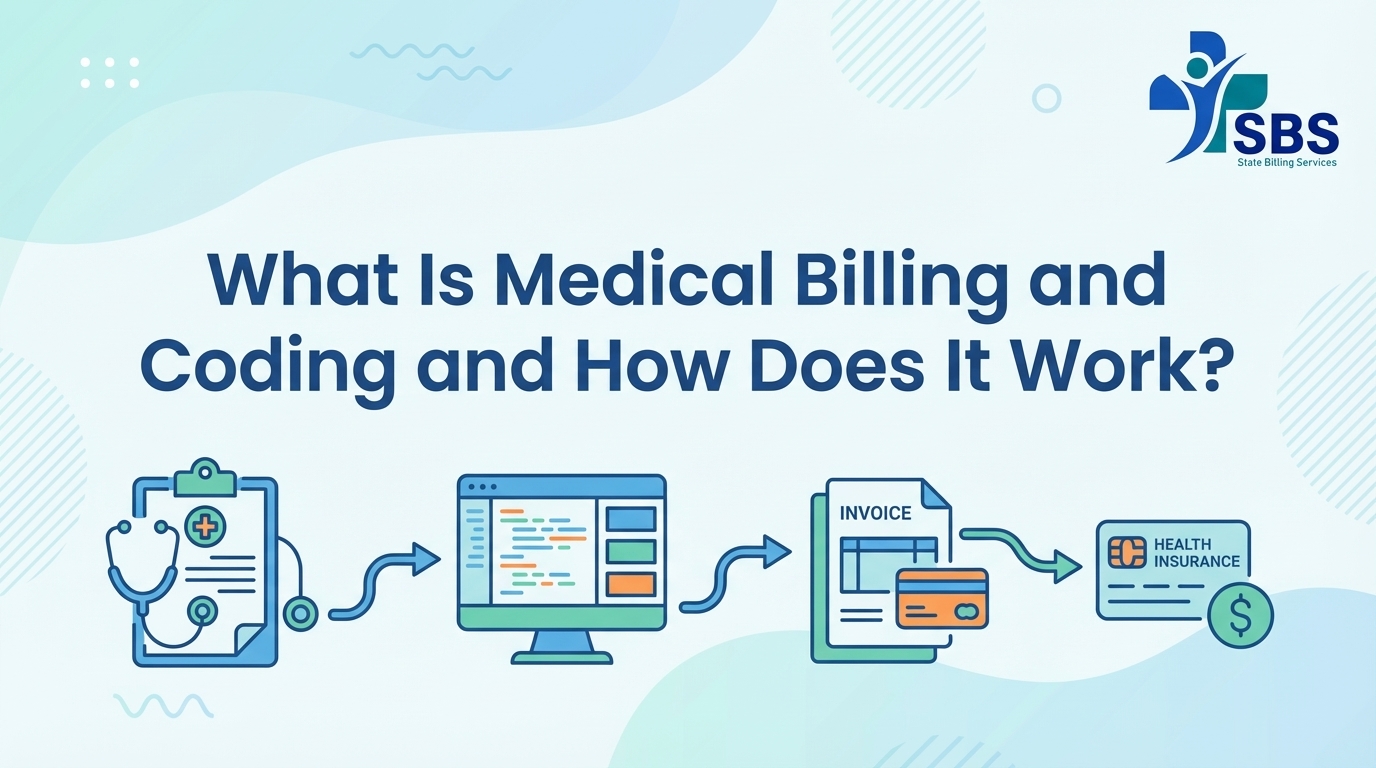
Every time you visit a doctor, someone behind the scenes makes sure the right people get paid. That person works in medical billing and coding. But most people have no idea what this job really involves.
So what is medical billing and coding? It is the process of turning medical services into codes and then using those codes to bill insurance companies and patients. It is a key part of how healthcare gets funded.
In this guide, you will learn exactly what medical billing and coding is, what the job looks like, real coding examples, and why this field is growing fast.
What Is Medical Billing and Coding?
Medical billing and coding is a two-part process used in healthcare.
Medical coding means taking information from a patient’s visit and turning it into standard codes. These codes describe the diagnosis, the treatment, and the procedure. Every illness, injury, and medical service has its own code.
Medical billing means using those codes to create a claim. That claim goes to the insurance company. The insurance company reviews it and pays the provider. If there is a remaining balance, the patient is billed for it.
Together, medical coding and billing keeps the entire healthcare payment system running.
Without it, hospitals and clinics would not get paid. Doctors could not keep their practices open. And insurance companies would have no standard way to process claims.
Why Is Medical Billing and Coding Important?
Medical billing and coding is important for many reasons.
- It makes sure healthcare providers get paid correctly
- It reduces errors in billing and insurance claims
- It creates a standard system used across all of healthcare
- It protects patients from being overbilled
- It helps insurance companies process claims faster
When medical coding billing is done right, everyone wins. Providers get paid. Patients get accurate bills. Insurance companies process claims without delays.
When it is done wrong, claims get rejected, providers lose money, and patients get confused bills.
How Does Medical Billing and Coding Work?
Here is a simple step-by-step breakdown of how medical billing and coding works.
- Patient visits a provider – You go to a doctor, clinic, or hospital
- Provider documents the visit – The doctor writes down your symptoms, diagnosis, and treatment
- Coder reviews the records – A medical coder reads the notes and assigns the correct codes
- Claim is created – A medical biller uses the codes to build an insurance claim
- Claim is submitted – The claim goes to the insurance company
- Insurance processes the claim – They approve, deny, or request more information
- Payment is made – The insurance pays the provider
- Patient is billed for the rest – Any remaining balance goes to the patient
This whole process can take days or weeks. A good medical billing and coding team makes it move as fast and accurately as possible.
Medical Coding Examples
Understanding medical coding examples helps make this concept real.
Here are a few simple medical coding examples:
Example 1 – Diagnosis Code A patient comes in with Type 2 diabetes. The coder assigns the ICD-10 code E11.9. This code tells the insurance company exactly what condition was treated.
Example 2 – Procedure Code A patient gets a blood test. The coder assigns a CPT code like 80053. This tells the insurer what service was performed.
Example 3 – Office Visit Code A patient has a routine checkup with their doctor. The coder assigns CPT code 99213 for a standard office visit.
These medical coding examples show how a description becomes a number. That number travels through the entire billing and payment process.
The two main coding systems used in medical coding billing are:
- ICD-10 codes – International Classification of Diseases. Used for diagnoses.
- CPT codes – Current Procedural Terminology. Used for procedures and services.
- HCPCS codes – Healthcare Common Procedure Coding System. Used for equipment and supplies.
Medical Billing and Coding Job Description
Now let’s look at what the actual work involves. A medical billing and coding job description covers a wide range of tasks.
Daily Tasks in the Job
People who work in medical billing and coding do the following every day:
- Read patient medical records carefully
- Assign the correct ICD-10 and CPT codes to each visit
- Create and submit insurance claims
- Follow up on denied or delayed claims
- Communicate with insurance companies to resolve issues
- Bill patients for their remaining balance
- Keep patient records up to date and organized
- Make sure all coding follows legal and ethical guidelines
Skills Needed for the Job
A good medical billing and coding professional needs:
- Attention to detail
- Knowledge of medical terminology
- Familiarity with coding systems like ICD-10 and CPT
- Computer skills and experience with billing software
- Good communication skills for working with patients and insurers
- Ability to work with sensitive and private information
The medical billing and coding job description may vary by employer. Hospitals, clinics, insurance companies, and remote billing services all hire for this role.
Medical Coding and Billing: In-Person vs. Remote Work
One great thing about medical coding and billing is flexibility. Many professionals now work from home.
Remote medical coding and billing jobs have grown a lot since 2020. You can work from anywhere as long as you have a computer and a secure internet connection.
This makes medical billing and coding a popular career choice for people who want flexibility and stability at the same time.
What Training Do You Need?
To start a career in medical billing and coding, most employers want:
- A high school diploma or equivalent
- A certificate or associate degree in medical billing and coding
- Certification from an organization like AAPC or AHIMA
The American Academy of Professional Coders (AAPC) offers the Certified Professional Coder (CPC) credential. This is one of the most recognized certifications in the field.
Training programs usually take 1 to 2 years. Many are available online. This makes it easy to study at your own pace while working or caring for a family.
According to the U.S. Bureau of Labor Statistics, employment of medical records and health information specialists is projected to grow 9% from 2023 to 2033. That is faster than the average for all occupations. This shows how much demand there is for people trained in medical coding billing.
How Much Can You Earn?
Salary depends on experience, location, and specialty. But here are some general numbers:
- Entry-level medical billing and coding professionals earn around $35,000 to $42,000 per year
- Experienced coders with certifications can earn $55,000 to $70,000 or more
- Specialized coders in areas like cardiology or oncology often earn even more
Medical coding and billing is a career that rewards skill and experience. The more you know, the more you can earn.
Common Mistakes in Medical Billing and Coding
Even experienced professionals make mistakes. Here are the most common ones:
- Using the wrong code for a diagnosis or procedure
- Upcoding (using a code for a more expensive service than what was provided)
- Downcoding (using a code for a less expensive service)
- Missing deadlines for claim submission
- Not updating codes when new versions come out
These mistakes can lead to claim denials, audits, and even legal trouble. This is why accuracy in medical billing and coding is so important.
Who Uses Medical Billing and Coding?
Medical coding billing is used in many settings. Here are the most common:
- Hospitals and health systems
- Private doctor’s offices
- Urgent care centers
- Mental health clinics
- Physical therapy offices
- Dental offices (for medical procedures)
- Insurance companies
- Government health programs like Medicare and Medicaid
No matter the setting, the need for accurate medical billing and coding remains the same.
Related post:
External Link: U.S. Bureau of Labor Statistics – Medical Records Specialists: https://www.bls.gov/ooh/healthcare/medical-records-and-health-information-technicians.htm
External Link: AAPC – American Academy of Professional Coders: https://www.aapc.com
FAQs: Most Searched Questions
Q1: What is medical billing and coding in simple terms?
It is the process of converting medical services into codes and using those codes to bill insurance companies and patients for payment.
Q2: Is medical billing and coding a good career?
Yes. It is a stable, growing career with flexible work options, including remote work. Demand is rising every year.
Q3: How long does it take to learn medical billing and coding?
Most programs take 1 to 2 years. Some short certificate courses can be completed in less than a year.
Q4: What is the difference between medical billing and medical coding?
Medical coding converts patient records into standard codes. Medical billing uses those codes to create and submit claims to insurance companies.
Q5: Do medical billing and coding professionals work from home?
Yes. Many professionals in medical coding and billing now work remotely. It is one of the most flexible healthcare careers available.
Final Thoughts
So now you know what is medical billing and coding and why it matters so much. It is not a glamorous job, but it is one of the most important in all of healthcare. Every doctor’s payment, every insurance claim, and every patient bill runs through this process.
If you are looking for a stable career with real growth potential, medical billing and coding is worth exploring. The training is accessible. The demand is real. And the work can be done from almost anywhere.
Medical coding billing keeps the healthcare system financially healthy. And the people who do it well are always in demand.
Search
Categories
Recent Posts
- Colorado Medicaid CPT Code Billing and Billing Chart Guide April 21, 2026
- Medical Billing News Today: What Providers Must Know April 20, 2026
- What Is Healthcare Marketing and Why Does It Matter? April 15, 2026
- American Medical Billing Association & CPT Codes Explained April 14, 2026
- Affordable Medical Billing Services: What Every Doctor Needs to Know April 13, 2026
- How Medical Billing Automation Reduces Claim Denials April 12, 2026
- Healthcare Denial Management Software: Complete Guide April 12, 2026
Recent Comments
- Colorado Medicaid CPT Code Billing and Billing Chart Guide - statebillingservices.com on What Is Denial Management in Medical Billing?
- Medical Billing News Today: What Providers Must Know - statebillingservices.com on What Is AR Follow Up in Medical Billing and Why It Matters
- What Is Healthcare Marketing and Why Does It Matter? - statebillingservices.com on What Is AR Follow Up in Medical Billing and Why It Matters
- American Medical Billing Association & CPT Codes Explained - statebillingservices.com on What Is Denial Management in Medical Billing?
- Affordable Medical Billing Services: What Every Doctor Needs to Know - statebillingservices.com on What Is AR Follow Up in Medical Billing and Why It Matters
- How Medical Billing Automation Reduces Claim Denials - statebillingservices.com on What Is AR Follow Up in Medical Billing and Why It Matters
- Healthcare Denial Management Software: Complete Guide - statebillingservices.com on What Is AR Follow Up in Medical Billing and Why It Matters
State Billing Services is a healthcare solutions provider offering a full range of integrated services to support the clinical and administrative operations of medical practices.
Services
- Medical Billing
- Medical Coding
- AR Follow Up
- Credentialing
- Denial Management
- Healthcare Marketing