Introduction
Imagine sending out 100 claims. Now imagine 30 of them coming back denied.
That is the reality for many healthcare practices in the US today. Claim denials cost the healthcare industry billions of dollars every year. Most of those losses are avoidable.
The good news? Medical billing automation is changing everything.
It helps hospitals, clinics, and private practices get paid faster. It reduces errors. It cuts down on claim denials. And it frees up your staff to focus on patients instead of paperwork.
In this guide, you will learn exactly what medical billing automation is, how it works, why it matters for denial management, and how to pick the right tools for your practice.
What Is Medical Billing Automation?
Medical billing automation means using software and technology to handle billing tasks that were done manually before.
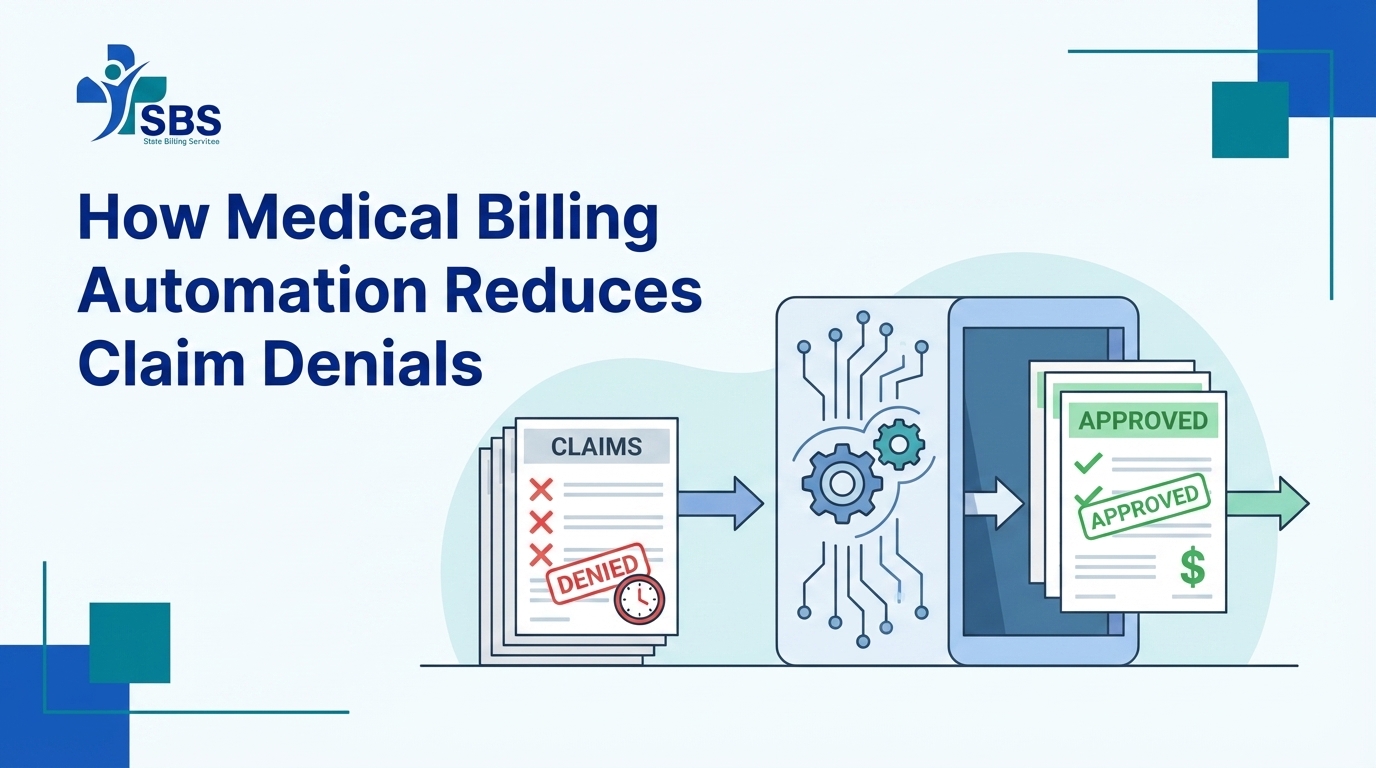
Instead of a staff member typing in patient data, checking codes, and submitting claims by hand, automation does all of that automatically. The system checks for errors before a claim is even sent. It tracks payments. It flags denied claims. It helps your team follow up faster.
Think of it as a smart assistant that works 24/7 without making human mistakes.
Here is what medical billing automation handles:
- Patient registration and insurance verification
- Medical code assignment and validation
- Claim creation and electronic submission
- Payment posting and reconciliation
- Denial tracking and re-submission
- Real-time reporting and analytics
Every step of this process, when done manually, is a chance for human error. Automation removes most of those chances.
Why Claim Denials Are Such a Big Problem
Let us look at the numbers. According to the American Medical Association (AMA), physicians spend an average of 14.5 hours per week dealing with prior authorizations and insurance-related tasks. That is nearly two full working days lost every week, just on administrative work.
On top of that, industry research shows that up to 30% of medical claims are denied on the first submission. Out of those denied claims, around 60% are never re-submitted. That is revenue simply left on the table.
The main reasons claims get denied include:
- Wrong or missing patient information
- Incorrect billing codes
- No prior authorization
- Duplicate claims
- Filing past the deadline
- Services not covered by the plan
Most of these causes are preventable. That is where medical billing automation and smart denial management come in.
How Medical Billing Automation Reduces Claim Denials
Medical billing automation directly targets the root causes of denials. Here is how it works in practice.
1. Eligibility Verification Before the Visit
Before a patient even walks through the door, automated systems verify their insurance eligibility. This step alone prevents a huge number of denials. If a patient’s plan does not cover a service, you know ahead of time.
2. Clean Claims Before Submission
Automation software scrubs claims before sending them. It checks for errors in codes, patient data, and required fields. A clean claim is far less likely to be denied. This is called a “first-pass acceptance rate,” and the best billing systems achieve 95% or higher.
3. Real-Time Code Validation
Billing codes change often. Automation tools update code libraries automatically. This means your team is always using the latest, correct codes. Wrong codes are one of the top denial triggers, and automation eliminates most of them.
4. Faster Re-Submission on Denied Claims
When a claim is denied, time matters. Denial management through automation means your system immediately flags the denial, identifies the reason, and helps re-submit a corrected claim quickly. Manual processes slow this down. Automation speeds it up.
Understanding Denial Management in Medical Billing
Denial management is the process of identifying, fixing, and appealing denied claims. It is one of the most important parts of revenue cycle management (RCM).
Without a proper system, denied claims pile up. Staff scramble to figure out why. Deadlines pass. Revenue is lost.
With healthcare denial management software, the process becomes organized and efficient.
A good denial management system does three things:
- Identifies why claims are being denied
- Categorizes denials by type and payer
- Tracks re-submissions and appeal outcomes
You can read more about how State Billing Services handles this process on their Denial Management Services page.
Hospital Denial Management: A Special Challenge
For hospitals, the billing process is even more complex. There are more patients, more services, more codes, and more payers. One small error on a high-value claim can mean thousands of dollars lost.
Hospital denial management requires automation at scale. A manual team simply cannot keep up with the volume of claims a hospital generates every day.
With medical billing automation, hospitals can:
- Process thousands of claims simultaneously
- Monitor denial trends across departments
- Identify which payers deny the most claims
- Automate appeals for common denial reasons
- Reduce A/R (accounts receivable) days significantly
State Billing Services reports that their clients see a 35% reduction in A/R days after implementing proper denial management processes. That directly translates to better cash flow for the hospital.
Denial Prevention: Stop Problems Before They Start
The best denial management strategy is not fixing denied claims. It is stopping them from being denied in the first place. This is called denial prevention.
Denial prevention focuses on:
- Training staff on accurate documentation
- Using automation to catch errors pre-submission
- Setting up prior authorization workflows
- Verifying patient insurance before every visit
- Keeping billing codes current
Medical billing automation supports all of these steps. It acts as a checkpoint before every claim goes out. Think of it as a built-in quality control system.
When practices invest in denial prevention, they spend less time chasing payments and more time delivering care.
What to Look for in Healthcare Denial Management Software
Not all software is equal. When choosing healthcare denial management software, look for these features:
Must-Have Features:
- Real-time eligibility checks – Verify insurance instantly
- Claim scrubbing engine – Catch errors before submission
- Denial reason tracking – Know exactly why claims are denied
- Automated appeals workflows – Re-submit faster with less manual effort
- Reporting and analytics dashboard – See denial trends clearly
- EHR integration – Connect billing to your clinical records
- HIPAA compliance – Patient data must always be protected
Questions to Ask Before Buying:
- Does it integrate with my current EHR system?
- What is the average first-pass acceptance rate?
- How does it handle appeals?
- What training and support do they offer?
You can also explore the services available at State Billing Services to see how a professional billing team uses these tools to maximize revenue for practices across the US.
Healthcare Denial Management Software vs. Outsourced Billing
Some practices choose to buy their own healthcare denial management software. Others outsource their billing entirely to a professional service.
Here is a quick comparison:
In-house software:
- You control the process
- Requires trained staff
- Upfront software costs
- Ongoing maintenance needed
Outsourced billing service:
- Experts handle everything
- No software investment needed
- Scales with your practice
- Faster results, less learning curve
For smaller practices, outsourcing is often the smarter financial choice. For larger hospitals, a hybrid approach works well. Having both strong medical billing automation software and expert billing support gives you the best of both worlds.
Real Example: How Automation Changed One Practice’s Revenue
A mid-sized primary care group in the Southeast was losing nearly $200,000 per year in denied claims. Their team was manually tracking denials in spreadsheets. Re-submissions were slow. Appeals were missed.
After switching to automated medical billing automation and working with a professional billing partner, their denial rate dropped from 28% to under 6% in just three months. Their collection rate improved. Staff spent less time on billing and more time on patients.
This kind of result is not unusual. It happens when practices take denial prevention seriously and use the right tools.
FAQs: Most Searched Questions About Medical Billing Automation
Q1: What is medical billing automation and how does it work?
Medical billing automation uses software to handle billing tasks like claim submission, payment posting, and denial tracking automatically, without manual data entry at every step.
Q2: How does automation help with denial management?
It flags errors before claims are sent, tracks denials in real time, identifies the reason for each denial, and automates the re-submission and appeal process.
Q3: What is the difference between denial management and denial prevention?
Denial management fixes claims after they are denied. Denial prevention stops claims from being denied in the first place by catching errors before submission.
Q4: Is healthcare denial management software worth the investment?
Yes. Practices that use it typically see lower denial rates, faster payments, and improved revenue. The return on investment is usually seen within the first few months.
Q5: Can small medical practices benefit from medical billing automation?
Absolutely. Even small practices with limited staff benefit greatly because automation reduces errors and frees up time. Many small practices outsource billing to get access to automation without buying expensive software.
Final Thoughts
Medical billing automation is not a trend. It is the future of healthcare revenue management.
Denied claims cost your practice money, time, and energy. Manual billing processes make the problem worse. Healthcare denial management software and smart denial prevention strategies fix that.
Whether you run a solo practice or manage billing for a large hospital, the right automation tools will help you:
- Submit cleaner claims
- Reduce denials significantly
- Get paid faster
- Spend more time on patient care
If your practice is struggling with hospital denial management or claim denials in general, now is the time to act. Do not wait until more revenue slips away.
Related Post:
- What Is AR Follow Up in Medical Billing and Why It Matters: https://statebillingservices.com/what-is-ar-follow-up-in-medical-billing/
- What Is Medical Billing and Coding and How Does It Work: https://statebillingservices.com/what-is-medical-billing-and-coding/
- American Medical Association (AMA) on prior authorization: https://www.ama-assn.org/practice-management/prior-authorization
- CMS.gov on claim submission and billing: https://www.cms.gov/medicare/payment/claim-processing
Search
Categories
Recent Posts
- Colorado Medicaid CPT Code Billing and Billing Chart Guide April 21, 2026
- Medical Billing News Today: What Providers Must Know April 20, 2026
- What Is Healthcare Marketing and Why Does It Matter? April 15, 2026
- American Medical Billing Association & CPT Codes Explained April 14, 2026
- Affordable Medical Billing Services: What Every Doctor Needs to Know April 13, 2026
- How Medical Billing Automation Reduces Claim Denials April 12, 2026
- Healthcare Denial Management Software: Complete Guide April 12, 2026
Recent Comments
- Colorado Medicaid CPT Code Billing and Billing Chart Guide - statebillingservices.com on What Is Denial Management in Medical Billing?
- Medical Billing News Today: What Providers Must Know - statebillingservices.com on What Is AR Follow Up in Medical Billing and Why It Matters
- What Is Healthcare Marketing and Why Does It Matter? - statebillingservices.com on What Is AR Follow Up in Medical Billing and Why It Matters
- American Medical Billing Association & CPT Codes Explained - statebillingservices.com on What Is Denial Management in Medical Billing?
- Affordable Medical Billing Services: What Every Doctor Needs to Know - statebillingservices.com on What Is AR Follow Up in Medical Billing and Why It Matters
- How Medical Billing Automation Reduces Claim Denials - statebillingservices.com on What Is AR Follow Up in Medical Billing and Why It Matters
- Healthcare Denial Management Software: Complete Guide - statebillingservices.com on What Is AR Follow Up in Medical Billing and Why It Matters

State Billing Services is a healthcare solutions provider offering a full range of integrated services to support the clinical and administrative operations of medical practices.
Services
- Medical Billing
- Medical Coding
- AR Follow Up
- Credentialing
- Denial Management
- Healthcare Marketing