Introduction
You worked hard. You treated your patient. You submitted the claim.
Then the insurance company said no.
That one word, “denied,” can cost your practice thousands of dollars every month. And if you do not have a strong denial management process in place, those denials pile up fast.
Denial management is the process of identifying, appealing, and preventing denied insurance claims. It is one of the most important parts of running a healthy medical practice. Without it, you lose money that you already earned.
According to the American Medical Association, about 1 in 5 insurance claims is either denied or delayed on the first submission. That is a big number. And most of those denials can be fixed, or even avoided in the first place.
This article will explain what denial management is, what the common denials in medical billing are, and how you can lower your denial rates with better medical coding and smarter billing practices.
What Is Denial Management?
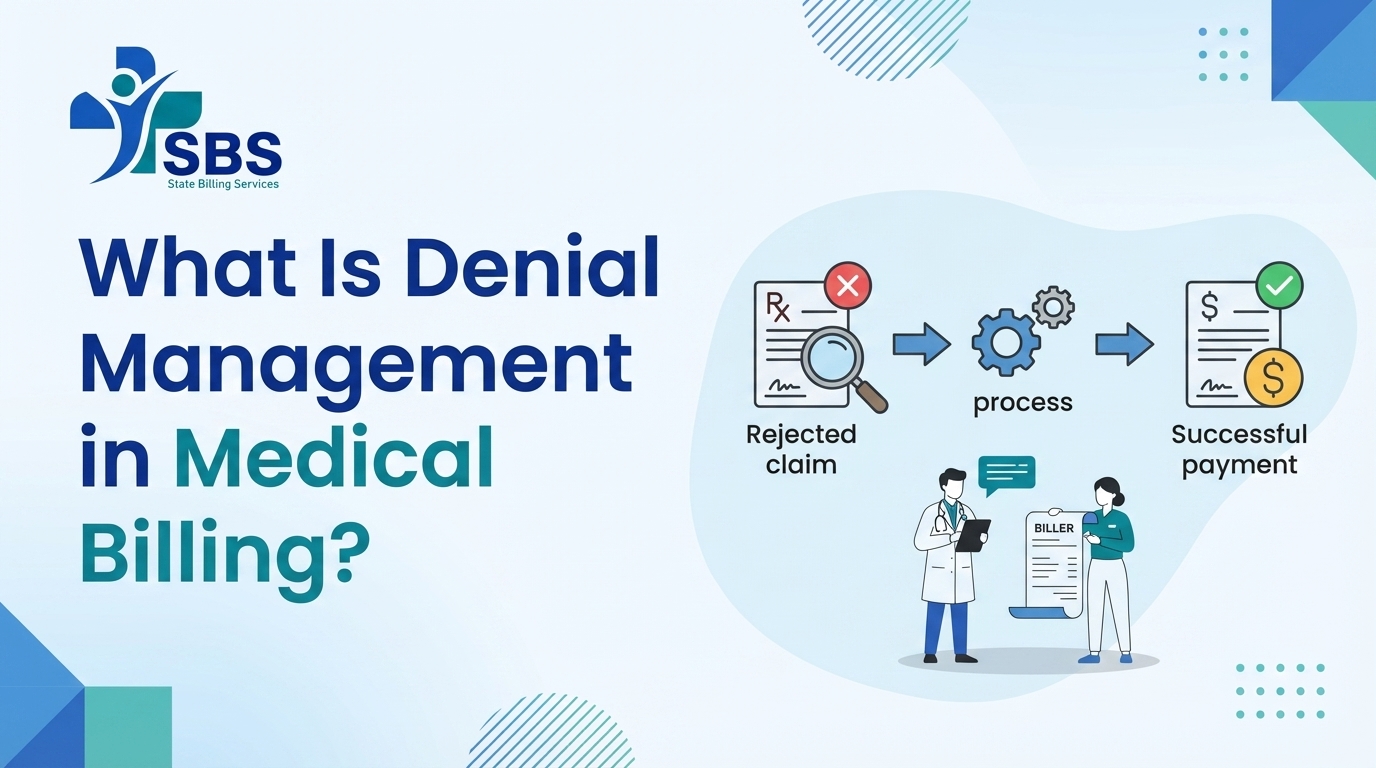
Denial management is the system your billing team uses to handle claims that insurance companies reject.
It involves three main steps:
- Identifying why a claim was denied
- Appealing the denial with the right documentation
- Preventing the same denial from happening again
A good denial management system does not just fix problems. It stops them before they start.
What Does Claim Denial Mean?
Before we go further, let us make sure we understand the claim denial meaning clearly.
A claim denial means an insurance company has refused to pay for a medical service. This can happen for many reasons. Sometimes the coding is wrong. Sometimes the patient’s information is missing. Sometimes the service was not pre-authorized.
There are two types of denials you need to know about:
Hard Denials: These are final. The claim will not be paid unless you file an appeal. Examples include claims filed after the deadline or services not covered by the plan.
Soft Denials: These are temporary. The claim can be corrected and resubmitted. Examples include missing information or incorrect patient details.
Understanding the claim denial meaning helps your team respond faster and in the right way.
Common Denials in Medical Billing
Knowing the most common denials in medical billing is the first step in stopping them. Here are the top reasons claims get denied:
1. Patient Information Errors
Wrong name, wrong date of birth, wrong insurance ID. These simple mistakes lead to automatic denials.
2. Missing or Invalid Authorization
Some services need pre-approval from the insurance company. If you skip this step, the claim gets denied.
3. Duplicate Claims
Submitting the same claim twice by mistake triggers an automatic rejection.
4. Wrong or Mismatched Medical Codes
If the diagnosis code does not match the procedure code, the claim fails. This is one of the most common denials in medical billing.
5. Timely Filing Issues
Every insurance plan has a deadline for claim submission. Missing that window means the claim is denied automatically.
6. Services Not Covered
Some treatments are simply not covered under a patient’s plan. Your team needs to verify coverage before the appointment.
7. Coordination of Benefits (COB) Issues
When a patient has more than one insurance plan, billing the wrong plan first leads to a denial.
How A/R Billing and Follow Up Connects to Denial Management
A/R billing and follow up is the process of tracking unpaid and denied claims and making sure they get resolved. Without a solid A/R billing and follow up system, denials just sit there and age. The older a claim gets, the harder it is to collect.
Here is how A/R billing and follow up works in denial management:
- Your billing team reviews all denied claims in the A/R (accounts receivable) report
- They sort claims by denial reason, payer, and age
- They prioritize high-value denials and urgent deadlines
- They correct and resubmit claims or file formal appeals
- They track outcomes and report on denial trends
For a deeper look at how this process works, read this article on AR follow up from State Billing Services:
https://statebillingservices.com/what-is-ar-follow-up-in-medical-billing/
Good A/R billing and follow up is not just reactive. It is proactive. Your team should look at denial patterns and fix the root cause, not just the individual claim.
Why Denial Management Matters for Your Revenue
Let us talk numbers for a second.
The Healthcare Financial Management Association (HFMA) reports that the average hospital loses 3% to 5% of net revenue to unresolved claim denials. For smaller practices, that percentage can be even higher.
Think about what that means. If your practice brings in $1 million a year, you could be losing $30,000 to $50,000 just from poor denial management.
That money is not gone forever. Most denied claims can be recovered. But only if you have a system to catch them, correct them, and resubmit them on time.
Strong denial management turns those lost dollars back into revenue.
How to Lower Denial Rates with Medical Coding
One of the most powerful ways to lower denial rates with medical coding is to get the codes right the first time. Medical coding errors are responsible for a huge portion of denials. Here is what you can do:
Use Accurate ICD and CPT Codes
Make sure your diagnosis codes (ICD-10) and procedure codes (CPT) match the clinical documentation. A mismatch is one of the top reasons for claim denials.
Conduct Regular Coding Audits
Do not wait for denials to find errors. Audit your coding regularly to catch mistakes before the claim goes out.
Train Your Team on Code Updates
Medical codes change every year. Your coders need to stay current with the latest ICD-10 and CPT updates. Out-of-date codes lead to automatic denials.
Use Coding Software with Built-In Checks
Many modern billing platforms flag coding errors before submission. Use them.
Document Everything Clearly
Coders can only code what is documented. If the physician’s notes are incomplete, the coding will be incomplete. Clear documentation is the foundation of accurate coding.
For a full breakdown of how coding fits into the billing process, check out this article from State Billing Services:
https://statebillingservices.com/medical-billing-vs-medical-coding/
Building a Strong Denial Management Process: Step by Step
Here is a simple framework for building a denial management system that actually works:
Step 1: Track Every Denial Log every denied claim. Record the payer, denial reason, and denial date. You cannot manage what you do not measure.
Step 2: Categorize Denial Reasons Group denials by category. Is it a coding issue? An eligibility issue? A documentation issue? Categorizing helps you spot patterns.
Step 3: Assign Responsibility Every denial should have an owner on your billing team. Someone needs to be accountable for resolving each claim.
Step 4: Set Timelines Appeals have deadlines. Make sure your team knows the filing limits for each payer and acts within that window.
Step 5: Appeal Strategically A strong appeal includes the original claim, the denial reason, supporting documentation, and a clear explanation of why the claim should be paid.
Step 6: Analyze and Prevent After resolving denials, review what caused them. Then fix the process so the same issue does not create more denials next month.
Denial Management Best Practices
Here are some proven best practices to strengthen your denial management process:
- Verify patient eligibility before every appointment
- Get pre-authorization for all services that require it
- Submit claims within 24 to 48 hours of the service date
- Follow up on all unpaid claims after 30 days
- Monitor your denial rate as a key performance metric
- Hold monthly denial review meetings with your billing team
- Work with certified coders who understand payer-specific requirements
Each of these steps directly supports lower denial rates and better cash flow for your practice.
How Technology Helps with Denial Management
Modern billing software makes denial management faster and more accurate.
Here is what good technology can do for your practice:
- Auto-flag errors before claims go out
- Track denial trends by payer and reason code
- Send alerts when claims approach filing deadlines
- Generate denial reports for management review
- Automate follow-up reminders for the A/R billing and follow up team
Many practices that invest in the right billing technology see a noticeable drop in denial rates within the first few months.
For more information on denial trends and payer data, visit the Centers for Medicare and Medicaid Services (CMS) at: https://www.cms.gov
When to Outsource Denial Management
Some practices handle denial management in-house. Others outsource it to a professional medical billing company.
Here are signs that outsourcing might be the right move for you:
- Your denial rate is above 5%
- Your A/R is aging beyond 90 days
- Your billing team is overwhelmed
- You are missing appeal deadlines regularly
- You do not have certified coders on staff
A professional denial management team brings experience, tools, and dedicated resources. They know how to handle common denials in medical billing across different payers and specialties.
The American Academy of Professional Coders (AAPC) offers resources and certified training for billing and coding professionals at: https://www.aapc.com
5 Most Searched FAQs About Denial Management
Q1: What is the difference between a claim rejection and a claim denial?
A rejection happens before the claim is processed. It usually means there is a formatting or data error. A denial happens after processing. The payer reviewed the claim but refused to pay it.
Q2: How long do I have to appeal a denied claim?
It depends on the payer. Most insurance companies give you 30 to 180 days to file an appeal. Always check the specific payer’s policy and act quickly.
Q3: What is a good denial rate for a medical practice?
A denial rate below 5% is generally considered good. The industry target is under 3%. If your rate is higher, your denial management process needs attention.
Q4: Can all denied claims be appealed?
Not always. Hard denials that are due to non-covered services or missed timely filing deadlines may not be overturned. But most soft denials can be corrected and resubmitted successfully.
Q5: How does medical coding affect denial rates?
Medical coding has a direct impact on denial rates. Wrong codes, mismatched codes, or outdated codes are among the most common reasons claims get denied. Better coding means fewer denials.
Final Thoughts
Denial management is not just a billing task. It is a revenue protection strategy.
Every denied claim is money your practice has already earned. Without a strong denial management process, that money slips away quietly. With the right system, the right team, and the right coding practices, you can recover lost revenue and prevent future losses.
Start by understanding the common denials in medical billing. Fix your A/R billing and follow up process. Lower denial rates with medical coding accuracy. And build a step-by-step denial management workflow that your team follows consistently.
Your revenue cycle will be stronger for it.
Search
Categories
Recent Posts
- Colorado Medicaid CPT Code Billing and Billing Chart Guide April 21, 2026
- Medical Billing News Today: What Providers Must Know April 20, 2026
- What Is Healthcare Marketing and Why Does It Matter? April 15, 2026
- American Medical Billing Association & CPT Codes Explained April 14, 2026
- Affordable Medical Billing Services: What Every Doctor Needs to Know April 13, 2026
- How Medical Billing Automation Reduces Claim Denials April 12, 2026
- Healthcare Denial Management Software: Complete Guide April 12, 2026
Recent Comments
- Colorado Medicaid CPT Code Billing and Billing Chart Guide - statebillingservices.com on What Is Denial Management in Medical Billing?
- Medical Billing News Today: What Providers Must Know - statebillingservices.com on What Is AR Follow Up in Medical Billing and Why It Matters
- What Is Healthcare Marketing and Why Does It Matter? - statebillingservices.com on What Is AR Follow Up in Medical Billing and Why It Matters
- American Medical Billing Association & CPT Codes Explained - statebillingservices.com on What Is Denial Management in Medical Billing?
- Affordable Medical Billing Services: What Every Doctor Needs to Know - statebillingservices.com on What Is AR Follow Up in Medical Billing and Why It Matters
- How Medical Billing Automation Reduces Claim Denials - statebillingservices.com on What Is AR Follow Up in Medical Billing and Why It Matters
- Healthcare Denial Management Software: Complete Guide - statebillingservices.com on What Is AR Follow Up in Medical Billing and Why It Matters

State Billing Services is a healthcare solutions provider offering a full range of integrated services to support the clinical and administrative operations of medical practices.
Services
- Medical Billing
- Medical Coding
- AR Follow Up
- Credentialing
- Denial Management
- Healthcare Marketing
2 thoughts on “What Is Denial Management in Medical Billing?”