Introduction
Your hospital submits a claim. The insurance company denies it. Now you have to fight to get paid.
This happens every single day in healthcare. And it costs a lot of money.
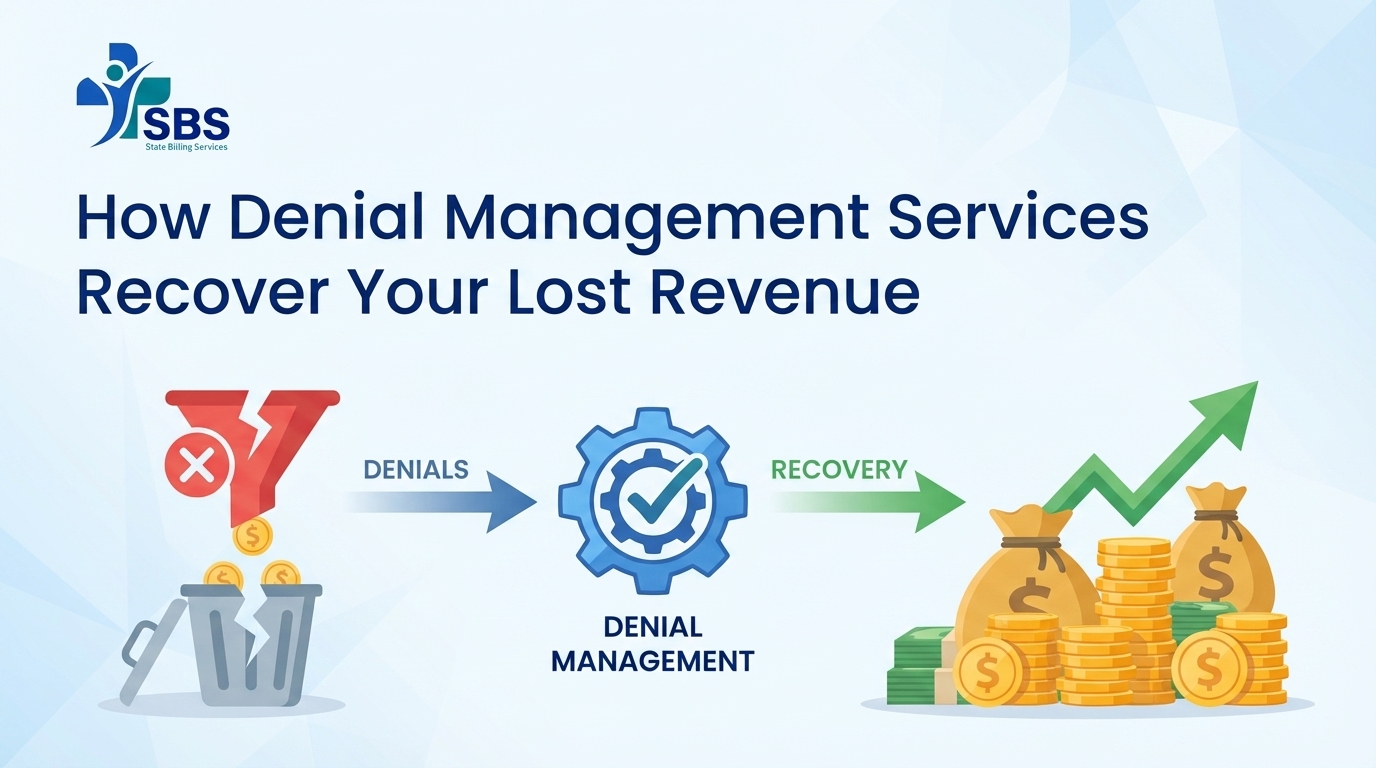
Denial management services help you fix this problem. They review denied claims, find the errors, resubmit them, and help you get the payment you deserve.
According to a report by the American Academy of Family Physicians, up to 30% of medical claims are denied or ignored on first submission. That is a huge number. And most of those denials can be reversed, if handled correctly.
This article explains what denial management services are, why they matter, and how they help hospitals and medical practices stop losing revenue.
What Are Denial Management Services?
Denial management services are professional billing solutions that handle denied or rejected insurance claims.
When a claim is denied, it does not mean the money is gone. It means something went wrong. Maybe the code was wrong. Maybe the documentation was missing. Maybe the patient’s insurance was not verified.
A denial management service steps in and:
- Reviews the denied claim
- Finds the reason for denial
- Corrects the error
- Resubmits the claim to the payer
- Tracks it until payment is received
These services are used by hospitals, clinics, physician groups, and billing companies. They are a key part of any strong revenue cycle.
Why Denied Claims Are a Big Problem
Denied claims are one of the biggest reasons healthcare providers lose money.
Here is what makes it worse. Many providers do not have the time or staff to chase every denied claim. So the claim just sits there. Or worse, it gets written off as a loss.
That is money left on the table.
Denial management services make sure that does not happen. They follow up on every denial. They fight for every dollar.
Some common reasons for denied claims include:
- Wrong patient information
- Incorrect billing codes
- Missing prior authorization
- Duplicate claim submissions
- Services not covered by the plan
- Lack of medical necessity documentation
Each one of these can be fixed. That is what denial management is all about.
How Denial Management Services Work
Good denial management services follow a clear process. Here is how it typically works:
Step 1: Claim Review
The team reviews the denied claim and reads the explanation of benefits (EOB) or remittance advice from the payer. This tells them why the claim was denied.
Step 2: Root Cause Analysis
They do not just fix the claim. They find out why it was denied in the first place. Was it a staff error? A system error? A payer issue? This step helps prevent the same mistake from happening again.
Step 3: Correction and Appeal
Once the problem is found, the team corrects the claim. They add missing documents, fix codes, or write a formal appeal letter. Then they resubmit the claim.
Step 4: Follow-Up
They track the resubmitted claim and follow up with the insurance company until a decision is made. If needed, they escalate it further.
Step 5: Reporting
A good denial management service gives you reports. You can see which claims were denied, why, and how many were recovered. This data helps you improve your billing process over time.
Hospital Denial Management: Special Challenges
Hospital denial management is more complex than individual practice billing.
Hospitals process thousands of claims every month. They deal with multiple payers, multiple departments, and multiple billing codes. One small error in any part of the process can lead to a denial.
Some unique challenges hospitals face include:
- High claim volume makes it hard to review each denial
- Multiple departments often use different coding systems
- Prior authorization requirements vary by payer
- Inpatient vs. outpatient billing rules are different
- Complex cases often need extra documentation
Hospital denial management teams are trained to handle all of this. They work fast, stay organized, and know the rules for each major payer.
For more on how billing solutions help hospitals, read this helpful resource on medical billing and coding services: https://statebillingservices.com/medical-billing-and-coding/
Denial Prevention: Stop Denials Before They Start
The best denial management strategy is one that also focuses on denial prevention.
Denial prevention means fixing problems before a claim is even submitted. This reduces the number of denials from the start.
Here is how denial prevention works:
Verify Patient Insurance Early
Always check insurance eligibility before the appointment. Know what is covered and what is not. This one step can prevent a large number of denials.
Use the Right Billing Codes
Train your billing team to use correct CPT and ICD-10 codes. One wrong digit can cause a denial. Denial management services often include code review as part of their workflow.
Get Prior Authorization
Some procedures require approval before they happen. If you skip this step, the claim will almost always be denied. Always get authorization in advance.
Document Medical Necessity
Insurance companies often deny claims because they do not see enough proof that the service was needed. Good clinical documentation fixes this. Make sure providers write clear, detailed notes.
Submit Claims on Time
Every payer has a deadline. If you miss it, the claim is denied. Denial management services track these deadlines so nothing slips through.
For a deeper look at clean claim submission and billing accuracy, visit: https://statebillingservices.com/revenue-cycle-management/
Benefits of Using Professional Denial Management Services
Why pay for a denial management service when you can try to handle it in-house?
Here is the honest answer: in-house teams are often overwhelmed. Denial management takes time, focus, and expertise. Most billing teams already have full plates.
Here is what professional denial management services bring to the table:
- Faster claim recovery: Experienced teams know exactly what to do and do it quickly.
- Higher recovery rates: Professionals recover more denied claims than overworked in-house staff.
- Better cash flow: Fewer denials and faster resubmissions mean money comes in sooner.
- Reduced write-offs: You stop losing money on claims that could have been fixed.
- Compliance support: Denial management experts stay current on payer rules and regulations.
- Time savings: Your staff can focus on patient care instead of chasing denials.
For more information on denial trends and payer data, visit the Centers for Medicare and Medicaid Services (CMS) at: https://www.cms.gov
What to Look for in a Denial Management Service
Not all denial management services are the same. Here is what to look for when choosing one:
- Experience with your specialty: Different specialties have different billing rules. Make sure the team knows yours.
- Transparent reporting: You should be able to see your denial rate, recovery rate, and trends.
- Fast turnaround: Denials should be worked within a few days, not weeks.
- Appeal expertise: Writing a strong appeal letter takes skill. Ask about their success rate.
- Denial prevention focus: The best services do not just fix denials. They help you prevent them.
Real Example: How Denial Management Saves Revenue
A mid-size hospital was writing off nearly $400,000 every year in denied claims. Their in-house billing team did not have time to follow up on every denial. Many claims were sitting past their appeal deadlines.
After hiring a professional denial management service, the hospital recovered over 70% of those denied claims within the first 90 days. That added more than $280,000 back into their revenue. They also reduced their monthly denial rate by 35% after the team identified the main root causes and helped fix the billing workflow.
This is a real-world example of what good denial management services can do.
FAQs
Q1: What is denial management in medical billing?
Denial management is the process of reviewing, correcting, and resubmitting insurance claims that were denied or rejected. It helps healthcare providers recover lost revenue and improve billing accuracy.
Q2: What are the most common reasons for claim denials?
The most common reasons include incorrect patient information, wrong billing codes, missing prior authorization, duplicate claims, and lack of medical necessity documentation.
Q3: How long does it take to appeal a denied claim?
It depends on the payer. Most insurance companies allow 30 to 180 days to file an appeal. Acting quickly improves the chance of getting paid.
Q4: Can all denied claims be recovered?
Not all, but many can. Studies show that 63% of denied claims are recoverable but many go unpursued. A good denial management service maximizes your recovery rate.
Q5: What is the difference between denial management and denial prevention?
Denial management fixes claims after they are denied. Denial prevention stops errors before the claim is submitted. The best billing services do both.
Final Thoughts
Denied claims are not the end of the road. They are a problem that can be solved.
Denial management services give you the tools, the team, and the process to fight back. Whether you run a small clinic or a large hospital, every denied claim matters. Every dollar recovered goes back into your practice.
Hospital denial management is especially critical. The volume is high, the rules are complex, and the financial stakes are real.
The smartest move is to focus on both denial management and denial prevention at the same time. Fix what is broken. Stop what is causing the breaks.
If your denial rate is too high, or your revenue is suffering from unpaid claims, professional denial management services are the answer.
Search
Categories
Recent Posts
- Colorado Medicaid CPT Code Billing and Billing Chart Guide April 21, 2026
- Medical Billing News Today: What Providers Must Know April 20, 2026
- What Is Healthcare Marketing and Why Does It Matter? April 15, 2026
- American Medical Billing Association & CPT Codes Explained April 14, 2026
- Affordable Medical Billing Services: What Every Doctor Needs to Know April 13, 2026
- How Medical Billing Automation Reduces Claim Denials April 12, 2026
- Healthcare Denial Management Software: Complete Guide April 12, 2026
Recent Comments
- Colorado Medicaid CPT Code Billing and Billing Chart Guide - statebillingservices.com on What Is Denial Management in Medical Billing?
- Medical Billing News Today: What Providers Must Know - statebillingservices.com on What Is AR Follow Up in Medical Billing and Why It Matters
- What Is Healthcare Marketing and Why Does It Matter? - statebillingservices.com on What Is AR Follow Up in Medical Billing and Why It Matters
- American Medical Billing Association & CPT Codes Explained - statebillingservices.com on What Is Denial Management in Medical Billing?
- Affordable Medical Billing Services: What Every Doctor Needs to Know - statebillingservices.com on What Is AR Follow Up in Medical Billing and Why It Matters
- How Medical Billing Automation Reduces Claim Denials - statebillingservices.com on What Is AR Follow Up in Medical Billing and Why It Matters
- Healthcare Denial Management Software: Complete Guide - statebillingservices.com on What Is AR Follow Up in Medical Billing and Why It Matters

State Billing Services is a healthcare solutions provider offering a full range of integrated services to support the clinical and administrative operations of medical practices.
Services
- Medical Billing
- Medical Coding
- AR Follow Up
- Credentialing
- Denial Management
- Healthcare Marketing