Introduction
Every hospital faces one big problem. Claims get denied. Money gets delayed. Staff spend hours fixing errors. This hurts cash flow and wastes time.
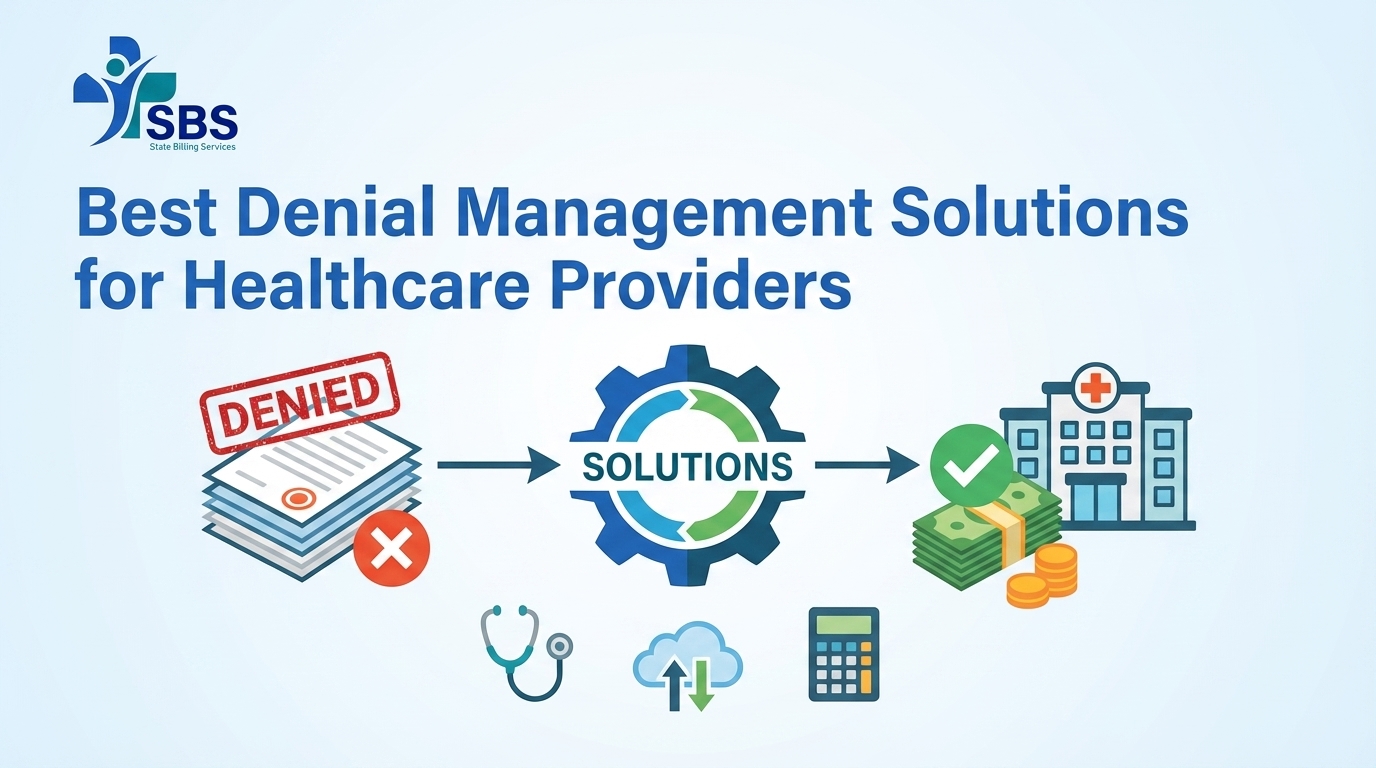
The good news is that denial management solutions can fix this. They help hospitals find errors early, prevent denials, and recover lost revenue. In this article, you will learn exactly how denial management works, why it matters, and what tools can help your hospital.
What Are Denial Management Solutions?
Denial management solutions are tools and processes that help healthcare providers handle claim denials. A claim denial happens when an insurance company refuses to pay for a medical service.
These solutions help you:
- Find why a claim was denied
- Fix the problem quickly
- Resubmit the claim correctly
- Track all denied claims in one place
- Prevent the same mistakes from happening again
Denial management is not just about fixing denials. It is about stopping them before they happen.
Why Denial Management Matters in Healthcare
According to the American Medical Association, around 15% to 20% of all healthcare claims are initially denied. That is a huge amount of lost or delayed revenue.
For hospitals and clinics, this means:
- Less cash coming in
- More work for billing staff
- Longer payment cycles
- Higher administrative costs
Without strong denial management solutions, hospitals lose money they have already earned. Patients receive the care. The hospital does the work. But the payment never arrives.
This is a serious problem. And it is getting worse as insurance rules become more complex every year.
How Hospital Denial Management Works
Hospital denial management is a step-by-step process. It starts the moment a claim is submitted and continues until the hospital is paid.
Here is how it works:
Step 1: Claim Submission
The billing team submits a claim to the insurance company. The claim includes patient details, procedure codes, and diagnosis codes.
Step 2: Insurance Review
The insurance company reviews the claim. They check if the codes are correct, if the service is covered, and if the documentation is complete.
Step 3: Denial or Payment
If everything is correct, the insurance pays the claim. If something is wrong, they send back a denial.
Step 4: Denial Review
The billing team receives the denial. They check the reason code. Every denial comes with a code that explains why it was rejected.
Step 5: Appeal or Correction
The team fixes the error and resubmits the claim. Or they write a formal appeal if they believe the denial is wrong.
Step 6: Payment Recovery
When the corrected claim is accepted, the hospital finally receives payment.
Effective denial management solutions make this entire process faster and more organized.
Common Reasons for Claim Denials
Understanding why claims get denied is the first step to preventing them. Here are the most common reasons:
- Missing or incorrect patient information (wrong date of birth, wrong insurance ID)
- Incorrect billing codes (wrong CPT or ICD-10 codes)
- Services not covered by the patient’s insurance plan
- Missing prior authorization for a procedure
- Duplicate claims submitted more than once
- Late filing past the insurance company’s deadline
- Incomplete documentation to support medical necessity
Each of these can be fixed. Denial management solutions help you catch them early, or stop them from happening at all.
What Is Denial Prevention?
Denial prevention means stopping a claim from being denied in the first place. It is smarter than just fixing denials after the fact.
Here is how denial prevention works:
- Eligibility checks before the patient’s appointment
- Prior authorization secured before a procedure
- Code review before the claim is submitted
- Staff training on payer-specific rules
- Automated alerts for missing information
Denial prevention saves time and money. When you stop denials before they happen, you get paid faster and your billing team has less stress.
For a deep dive into how eligibility checks reduce claim denials, visit this helpful resource:
State Billing Services Patient Eligibility Verification
Healthcare Denial Management Software: What Does It Do?
Healthcare denial management software is a digital tool that automates the denial management process. It replaces manual tracking with smart technology.
Here is what good software does:
Tracks All Denied Claims
The software keeps a record of every denied claim. You can see which claims are pending, which are under appeal, and which have been paid.
Identifies Patterns
Good software spots patterns. If the same code keeps getting denied, the software flags it. You can fix the root cause before it happens again.
Sends Alerts
The software sends automatic alerts when a claim is denied. Your team does not have to check manually. They get notified right away.
Generates Reports
You get detailed reports on denial rates, appeal success rates, and revenue recovered. This data helps you improve your billing process over time.
Reduces Human Error
When billing staff manually enter data, mistakes happen. Software reduces these errors by automating checks before a claim goes out.
If you want to learn more about how billing software can improve your revenue cycle, check out this resource: State Billing Services Medical Billing Services
The Real Cost of Not Using Denial Management Solutions
Let us look at a real example.
A mid-size hospital submits 10,000 claims per month. If 15% are denied, that is 1,500 denied claims. If each claim is worth $500 on average, that is $750,000 in delayed or lost revenue every single month.
Now imagine that half of those denials are never appealed. That is $375,000 gone every month. Every year.
This is why denial management solutions are not optional. They are essential for any hospital or clinic that wants to stay financially healthy.
For more information on denial trends and payer data, visit the Centers for Medicare and Medicaid Services (CMS) at: https://www.cms.gov
Key Benefits of Using Denial Management Solutions
Here is a quick summary of the biggest benefits:
- Faster payments – Fewer denials mean quicker cash flow
- More revenue recovered – Denied claims get resolved faster
- Less manual work – Automation handles the tracking
- Better compliance – Stay up to date with payer rules
- Stronger data – Reports help you spot and fix problems
- Happier staff – Billing teams are less overwhelmed
- Better patient experience – Fewer billing issues for patients too
What to Look for in Denial Management Solutions
Not all solutions are the same. Here is what to look for when choosing one:
- Easy integration with your existing billing system
- Real-time denial tracking dashboard
- Customizable alerts for different denial types
- Automated appeal workflows to save time
- Detailed reporting on denial trends
- Payer-specific rules built into the system
- Support team that understands healthcare billing
For hospitals in the US, it is also important to choose a solution that stays updated with Medicare and Medicaid rules. These change often, and your software needs to keep up.
How State Billing Services Helps with Denial Management
State Billing Services offers professional denial management solutions for hospitals, clinics, and healthcare providers. Their team handles the full denial management process so your staff can focus on patient care.
Their services include:
- Claim review and resubmission
- Insurance follow-up
- Appeal filing
- Denial tracking and reporting
- Denial prevention strategies
Learn more about their full revenue cycle management services here:
State Billing Services Revenue Cycle Management
5 Most Searched FAQs About Denial Management Solutions
Q1: What is the main purpose of denial management solutions?
The main purpose is to help hospitals and clinics recover money from denied insurance claims. These solutions also help prevent future denials by finding billing errors before claims are submitted.
Q2: How does healthcare denial management software help billing teams?
It automates tracking, sends alerts for new denials, identifies patterns, and generates reports. This saves time and reduces manual work for billing staff.
Q3: What is the difference between denial management and denial prevention?
Denial management deals with claims that have already been denied. Denial prevention focuses on stopping claims from being denied in the first place by checking eligibility, codes, and documentation before submission.
Q4: How long does it take to appeal a denied claim?
It depends on the insurance company. Most payers require appeals to be filed within 30 to 180 days of the denial date. Acting fast is important so you don’t miss the deadline.
Q5: Can small clinics also benefit from denial management solutions?
Yes. Small clinics often have limited staff and resources. Using denial management solutions helps them recover more revenue without hiring additional billing staff.
Final Thoughts
Denial management solutions are one of the most important investments a hospital or clinic can make. They help you recover revenue, prevent future denials, and keep your billing process running smoothly.
Whether you use healthcare denial management software or outsource to a professional billing team, the result is the same. You get paid faster, your team works smarter, and your hospital stays financially strong.
If you are struggling with denied claims, do not wait. The longer you delay, the more money you lose. Start with a strong denial management process today and protect the revenue your hospital has already earned.
Search
Categories
Recent Posts
- Colorado Medicaid CPT Code Billing and Billing Chart Guide April 21, 2026
- Medical Billing News Today: What Providers Must Know April 20, 2026
- What Is Healthcare Marketing and Why Does It Matter? April 15, 2026
- American Medical Billing Association & CPT Codes Explained April 14, 2026
- Affordable Medical Billing Services: What Every Doctor Needs to Know April 13, 2026
- How Medical Billing Automation Reduces Claim Denials April 12, 2026
- Healthcare Denial Management Software: Complete Guide April 12, 2026
Recent Comments
- Colorado Medicaid CPT Code Billing and Billing Chart Guide - statebillingservices.com on What Is Denial Management in Medical Billing?
- Medical Billing News Today: What Providers Must Know - statebillingservices.com on What Is AR Follow Up in Medical Billing and Why It Matters
- What Is Healthcare Marketing and Why Does It Matter? - statebillingservices.com on What Is AR Follow Up in Medical Billing and Why It Matters
- American Medical Billing Association & CPT Codes Explained - statebillingservices.com on What Is Denial Management in Medical Billing?
- Affordable Medical Billing Services: What Every Doctor Needs to Know - statebillingservices.com on What Is AR Follow Up in Medical Billing and Why It Matters
- How Medical Billing Automation Reduces Claim Denials - statebillingservices.com on What Is AR Follow Up in Medical Billing and Why It Matters
- Healthcare Denial Management Software: Complete Guide - statebillingservices.com on What Is AR Follow Up in Medical Billing and Why It Matters

State Billing Services is a healthcare solutions provider offering a full range of integrated services to support the clinical and administrative operations of medical practices.
Services
- Medical Billing
- Medical Coding
- AR Follow Up
- Credentialing
- Denial Management
- Healthcare Marketing