Introduction
Every day, hospitals and clinics lose thousands of dollars. The reason? Insurance claims get denied.
This is a big problem in healthcare. In fact, according to the American Medical Association, claim denial rates can reach up to 15% in some healthcare systems. That is a lot of lost money.
But there is good news. Healthcare denial management software can help. It automates the process, finds errors early, and helps you recover denied claims faster.
In this guide, you will learn exactly what healthcare denial management software is, how it works, and why every hospital needs it.
What Is Healthcare Denial Management Software?
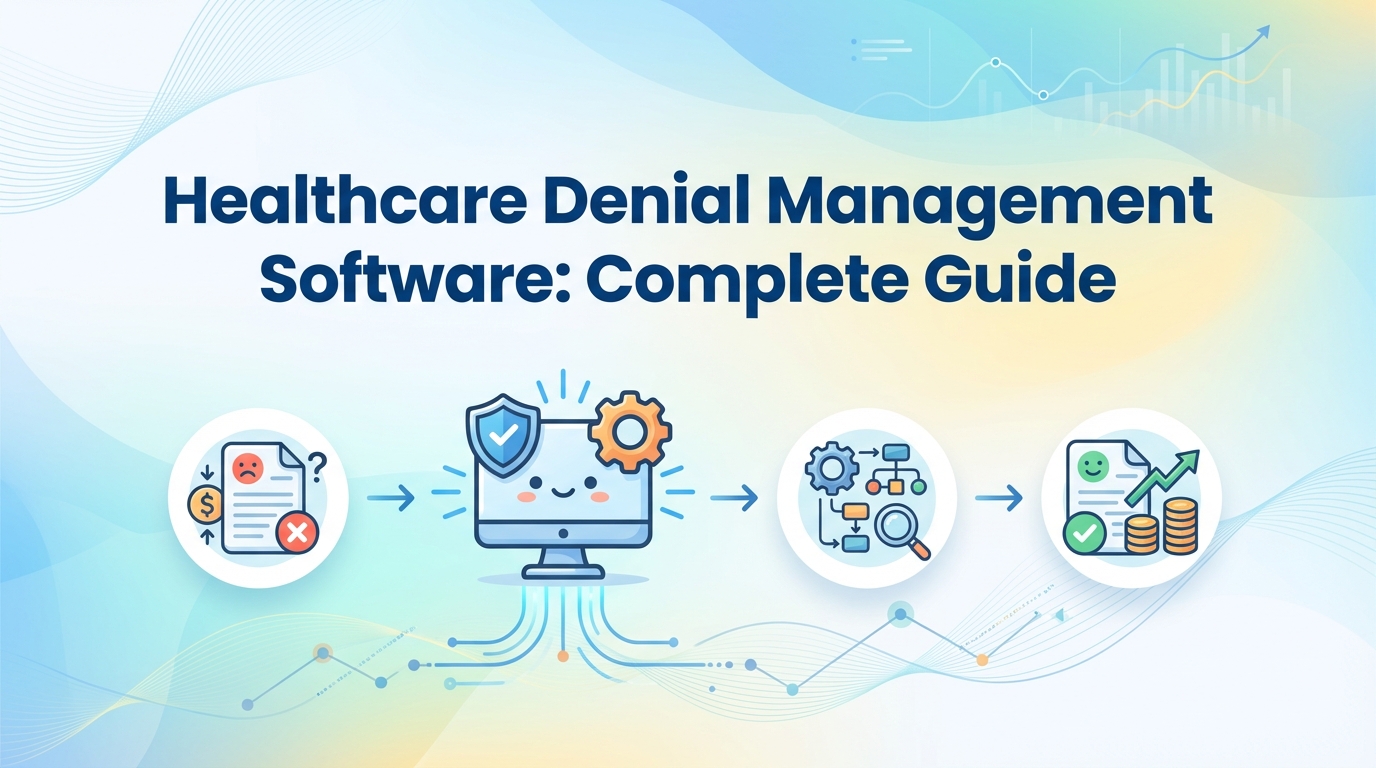
Healthcare denial management software is a digital tool. It helps hospitals and medical practices manage denied insurance claims.
When a payer, like an insurance company, refuses to pay a claim, that is a denial. The software helps you:
- Track the denial
- Find the reason
- Fix the problem
- Resubmit the claim
Without this software, billing teams do all of this by hand. That takes a lot of time and leads to more errors. With healthcare denial management software, the process becomes faster and more accurate.
Why Denial Management Matters in Healthcare
Denial management is the process of handling rejected claims. It is one of the most important parts of medical billing.
Here is why it matters:
- Denied claims mean delayed or lost payments
- Staff waste hours working on appeals manually
- Hospitals miss revenue they earned but never received
- Poor denial management hurts your cash flow
Hospital denial management is even more complex. Hospitals deal with hundreds or thousands of claims every day. One small mistake can trigger a denial. And if that denial is not handled quickly, the money is gone.
This is exactly why healthcare denial management software exists. It brings order to a very messy process.
Common Reasons Claims Get Denied
Before we talk about how the software helps, let us look at why claims get denied in the first place.
Top reasons for claim denials:
- Missing or incorrect patient information – Wrong name, date of birth, or insurance ID
- Wrong diagnosis or procedure codes – ICD or CPT code errors
- Lack of prior authorization – Payer required approval before the service
- Duplicate claims – The same claim was submitted more than once
- Timely filing issues – Claim was submitted after the deadline
- Not medically necessary – Payer does not agree the service was needed
- Out-of-network provider – Patient went to a provider not covered by their plan
Healthcare denial management software is built to catch these issues before a claim is even submitted.
How Healthcare Denial Management Software Works
Let us break this down in simple steps.
Step 1: Claim Submission
The software checks every claim before it is sent. It looks for errors in codes, patient data, and authorization status.
Step 2: Denial Detection
When a claim comes back denied, the software automatically captures the denial reason. It categorizes it and assigns it to the right team member.
Step 3: Root Cause Analysis
Good healthcare denial management software does not just fix the current denial. It finds the root cause. Why did this happen? Is it happening with many claims? That kind of analysis helps you stop future denials before they start.
Step 4: Appeals and Resubmission
The software helps you write and send appeals quickly. It tracks deadlines so you never miss a resubmission window.
Step 5: Reporting and Trends
You get reports. You can see which payers deny the most claims, which codes trigger issues, and how much money is at risk. This data helps you make better decisions.
Key Features to Look for in Healthcare Denial Management Software
Not all software is the same. Here are the features that matter most:
- Automated denial tracking – No manual logging needed
- AI-powered root cause analysis – Finds patterns across thousands of claims
- Real-time alerts – Know about a denial the moment it happens
- Workflow management – Assign tasks and track progress
- Integration with EHR/EMR – Connects with your existing systems
- Payer-specific rules engine – Knows the rules for each insurance company
- Detailed dashboards – Easy to read reports and analytics
- HIPAA compliance – Keeps patient data safe and secure
When you choose healthcare denial management software, make sure it has all of these features.
The Role of Denial Prevention
Denial prevention is just as important as denial management. The best software does both.
Prevention means stopping the denial before it happens. Here is how:
- Eligibility verification – Confirm the patient’s insurance before the visit
- Pre-authorization checks – Make sure required approvals are in place
- Code scrubbing – Review codes for accuracy before submission
- Staff training prompts – Alert billing staff about common mistakes
When you focus on denial prevention, your first-pass claim acceptance rate goes up. That means more money, faster, with less work.
According to a report by Change Healthcare, every 1% improvement in denial rates can recover hundreds of thousands of dollars for mid-sized hospitals. That is the power of both denial prevention and healthcare denial management software working together.
Hospital Denial Management: A Special Challenge
For hospitals, hospital denial management is more complex than in small clinics. Here is why:
- Hospitals process far more claims per day
- They work with more payer types
- They have more departments and service lines
- They face tighter compliance requirements
- A single denied high-cost claim can mean thousands of dollars lost
Large hospitals need healthcare denial management software that can scale. It must handle high volumes, work across departments, and give real-time visibility to leadership.
Many hospitals have dedicated denial management teams. But even those teams need the right software to work efficiently.
Benefits of Using Healthcare Denial Management Software
Let us look at the real benefits:
1. Faster Revenue Recovery Instead of waiting weeks to deal with a denial, the software flags it immediately. Appeals go out faster. Money comes in sooner.
2. Reduced Denial Rate With better denial prevention built in, fewer claims get rejected in the first place.
3. Less Manual Work Your billing team spends less time on paperwork. They can focus on more complex cases.
4. Better Compliance The software keeps up with payer rules and coding updates. You stay compliant without extra effort.
5. Clearer Financial Picture Reports and dashboards show you exactly where your revenue stands. No more guessing.
6. Improved Staff Productivity Automation handles routine tasks. Your team handles the work that actually needs human thinking.
Internal Resources to Help You Learn More
If you want to understand more about the medical billing process, check out these helpful articles from State Billing Services:
- Learn about AR Follow-Up in Medical Billing and why it matters for your revenue cycle:
👉 https://statebillingservices.com/what-is-ar-follow-up-in-medical-billing/
- Understand the difference between Medical Billing vs Medical Coding and how both affect your claims:
👉 https://statebillingservices.com/medical-billing-vs-medical-coding/
These resources will give you a stronger foundation for understanding denial management and the full revenue cycle.
For more expert information on this topic, visit these trusted sources:
- American Medical Association (AMA) – Guidelines on claim denials and appeals:
👉 https://www.ama-assn.org/practice-management/sustainability/claims-denials
- Centers for Medicare & Medicaid Services (CMS) – Official policies on Medicare claim denials:
👉 https://www.cms.gov/medicare/claims-and-appeals
FAQs: Most Searched Questions About Healthcare Denial Management Software
1. What is healthcare denial management software?
It is a digital tool that helps hospitals and clinics track, manage, and appeal denied insurance claims. It automates the process so your team can recover revenue faster and with fewer errors.
2. How does denial management software reduce claim denials?
It checks claims before submission for errors, missing information, and authorization issues. This catches problems early and stops denials before they happen. This is called denial prevention.
3. Is healthcare denial management software suitable for small clinics?
Yes. There are solutions for practices of all sizes. Small clinics benefit just as much as large hospitals because even one denied claim can hurt cash flow for a small practice.
4. How is hospital denial management different from regular denial management?
Hospitals deal with much higher claim volumes and more complex payer rules. Hospital denial management requires software that can scale, integrate with multiple systems, and provide department-level reporting.
5. How long does it take to see results after using denial management software?
Most practices see improvement in their first-pass claim rate within the first 30 to 60 days. Revenue recovery timelines depend on the volume of denied claims already in the system.
Final Thoughts
Healthcare denial management software is not just a nice tool to have. It is a must-have for any hospital or clinic that wants to protect its revenue.
Denied claims do not have to mean lost money. With the right software, you can catch errors early, appeal denials fast, and improve your overall billing process.
Whether you run a small clinic or a large hospital, denial management should be at the center of your revenue cycle strategy. Combine it with strong denial prevention practices and you will see real financial results.
If you want expert help with hospital denial management and your full revenue cycle, visit State Billing Services at https://statebillingservices.com/. They specialize in denial management, medical billing, and AR follow-up for healthcare providers across the United States.
Search
Categories
Recent Posts
- Colorado Medicaid CPT Code Billing and Billing Chart Guide April 21, 2026
- Medical Billing News Today: What Providers Must Know April 20, 2026
- What Is Healthcare Marketing and Why Does It Matter? April 15, 2026
- American Medical Billing Association & CPT Codes Explained April 14, 2026
- Affordable Medical Billing Services: What Every Doctor Needs to Know April 13, 2026
- How Medical Billing Automation Reduces Claim Denials April 12, 2026
- Healthcare Denial Management Software: Complete Guide April 12, 2026
Recent Comments
- Colorado Medicaid CPT Code Billing and Billing Chart Guide - statebillingservices.com on What Is Denial Management in Medical Billing?
- Medical Billing News Today: What Providers Must Know - statebillingservices.com on What Is AR Follow Up in Medical Billing and Why It Matters
- What Is Healthcare Marketing and Why Does It Matter? - statebillingservices.com on What Is AR Follow Up in Medical Billing and Why It Matters
- American Medical Billing Association & CPT Codes Explained - statebillingservices.com on What Is Denial Management in Medical Billing?
- Affordable Medical Billing Services: What Every Doctor Needs to Know - statebillingservices.com on What Is AR Follow Up in Medical Billing and Why It Matters
- How Medical Billing Automation Reduces Claim Denials - statebillingservices.com on What Is AR Follow Up in Medical Billing and Why It Matters
- Healthcare Denial Management Software: Complete Guide - statebillingservices.com on What Is AR Follow Up in Medical Billing and Why It Matters

State Billing Services is a healthcare solutions provider offering a full range of integrated services to support the clinical and administrative operations of medical practices.
Services
- Medical Billing
- Medical Coding
- AR Follow Up
- Credentialing
- Denial Management
- Healthcare Marketing